
Free Preview
Tower of Hanoi: Recursion, Stacks & Mathematical Induction
The Tower of Hanoi is a classic mathematical puzzle and a foundational benchmark in computer science used to teach algorithmic thinking. It provides a visual representation of the Divid...
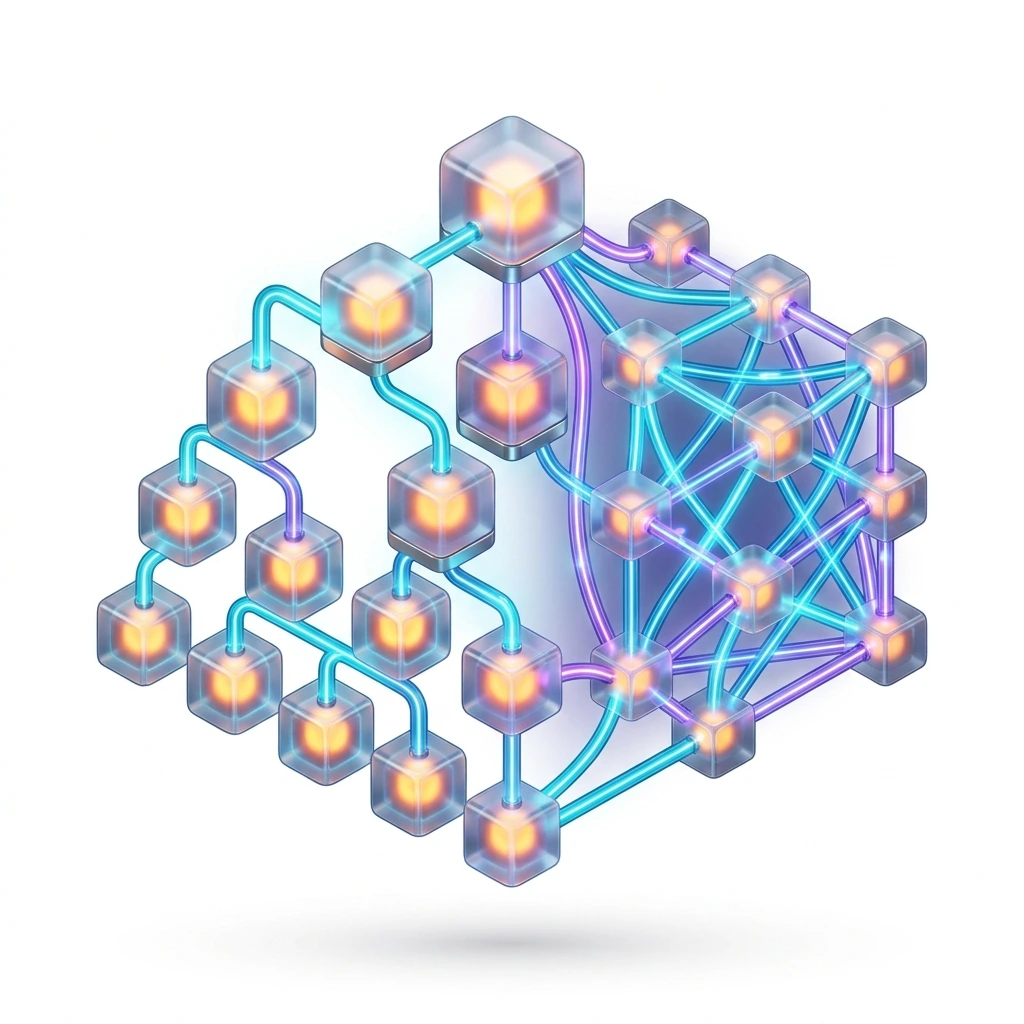
The Tower of Hanoi is a classic mathematical puzzle and a foundational benchmark in computer science used to teach algorithmic thinking. It provides a visual representation of the Divide-and-Conquer algorithmic paradigm, demonstrating how a complex problem can be broken down into identical, smaller sub-problems
Algorithmic Design: To implement, evaluate, and analyze recursive algorithms using a structural divide-and-conquer framework.Mathematical Verification: To experimentally verify the recurrence relation $T(n) = 2T(n-1) + 1$ and prove that the minimum moves required for $N$ disks equals $2^N - 1$.Data Structures Mapping: To trace call-stack behaviors, memory allocation, and line-by-line program counter execution during active recursion.Constraint Enforcement: To recognize boundary conditions, stack properties (LIFO—Last In, First Out), and prevent mathematical exceptions (stack overflow or rule violations).
ElementOS / Pro-Engine Virtual Environment: High-performance web-browser terminal.Tower of Hanoi Interactive Module: Graphical 3-peg platform handling $3$ to $10$ dynamic disks.In-Browser JavaScript IDE Workspace: Live code sandbox with structural loop protection.Asynchronous Call-Stack Tracker: Line-by-line runtime highlighter panel.Move Queue Ledger: Terminal logger capturing mathematical transformations.
Phase 1: Manual Constraint & Stack Rule VerificationToggle the simulator to Manual Play mode using the header tabs.Adjust the Disks ($N$) slider to $3$. Calculate your target baseline mathematical moves ($2^3 - 1 = 7$).Click and drag the smallest disk (Disk 1) from Peg A to Peg C.Attempt to drag a larger disk (Disk 2) directly on top of Disk 1.Observation: Notice the system rejecting the drop and flashing an error. This demonstrates the fundamental operational constraint: a larger disk can never sit atop a smaller one.Complete the 3-disk stack relocation to Peg C using Peg B as an auxiliary buffer, making sure you hit the optimal 7-move threshold.Phase 2: Automated Compilation & Call-Stack TracingSwitch the simulator tab back to Auto-Solve & Code mode.Increase the puzzle difficulty to $5$ Disks via the controller slider. Note the updated mathematical target ($2^5 - 1 = 31\text{ moves}$).Examine the pre-loaded recursive algorithm in the IDE window.Click the Compile & Run button.Observation: Watch the Code Step Highlight pane. Observe how the line-pointer jumps back and forth within the source block, visually mapping out the active states of the nested function calls.Adjust the Anim Speed slider down to a slower setting ($2$ or $3$). Trace the execution trail to observe how the code dynamically swaps the functional roles of the source, target, and auxiliary pegs to bypass stacking violations.
Programming / Output Details
Logic / Description
The algorithm works by splitting a large problem into two smaller, identical steps using a technique called structural induction.To move a stack of $n$ disks from a starting peg to an ending peg, it follows three main steps:It moves the top $n-1$ disks out of the way onto an extra, helper peg.It moves the single largest disk at the bottom directly to the destination peg.It picks up the $n-1$ disks from the helper peg and places them on top of the largest disk at the destination.Because each layer of the problem calls itself twice, the total number of operations doubles every time you add a disk. This creates an exponential growth pattern in terms of time, which can be expressed mathematically as:$$T(n) = 2T(n-1) + 1$$This simplifies to an overall time complexity of $\mathcal{O}(2^n)$, making it an excellent practical example for showing students how quickly exponential algorithms can scale up in terms of processing time.
Program Code (Raw Text)
/**
 * Tower of Hanoi - Recursive Algorithm
 * Framework for Computer Science & Discrete Mathematics Applications
 * * Available System API:
 * move(source, target) -> Translates top disk physically between pegs
 * N                    -> Global integer input for number of disks
 */

function solveHanoi(n, sourcePeg, targetPeg, auxiliaryPeg) {
    // Base Case: If only 0 disks are left, dissolve recursion branch
    if (n === 0) {
        return;
    }

    // Step 1: Shift the smaller sub-tower of (n-1) disks from Source to Auxiliary
    solveHanoi(n - 1, sourcePeg, auxiliaryPeg, targetPeg);

    // Step 2: Move the remaining largest base disk from Source directly to Target
    move(sourcePeg, targetPeg);

    // Step 3: Shift the sub-tower of (n-1) disks from Auxiliary back to Target
    solveHanoi(n - 1, auxiliaryPeg, targetPeg, sourcePeg);
}

// Global execution call targeting Peg A as start, Peg C as end, and Peg B as workspace
solveHanoi(N, 'A', 'C', 'B');
Expected Output (Raw Text)
[System] Compiling source tree script... success.
[System] Allocating operational vectors for N = 5 disks.
[System] Optimal Mathematical Moves Required: 31
[Runtime Trace] Executing solveHanoi(5, 'A', 'C', 'B')...
[Queue Log] Move 01: A -> C
[Queue Log] Move 02: A -> B
[Queue Log] Move 03: C -> B
[Queue Log] Move 04: A -> C
[Queue Log] Move 05: B -> A
[Queue Log] Move 06: B -> C
[Queue Log] Move 07: A -> C
[Queue Log] Move 08: A -> B
[Queue Log] Move 09: C -> B
[Queue Log] Move 10: C -> A
[Queue Log] Move 11: B -> A
[Queue Log] Move 12: C -> B
[Queue Log] Move 13: A -> C
[Queue Log] Move 14: A -> B
[Queue Log] Move 15: C -> B
[Queue Log] Move 16: A -> C
[Queue Log] Move 17: B -> A
[Queue Log] Move 18: B -> C
[Queue Log] Move 19: A -> C
[Queue Log] Move 20: B -> A
[Queue Log] Move 21: C -> B
[Queue Log] Move 22: C -> A
[Queue Log] Move 23: B -> A
[Queue Log] Move 24: B -> C
[Queue Log] Move 25: A -> C
[Queue Log] Move 26: A -> B
[Queue Log] Move 27: C -> B
[Queue Log] Move 28: A -> C
[Queue Log] Move 29: B -> A
[Queue Log] Move 30: B -> C
[Queue Log] Move 31: A -> C
[System] Target vector state achieved.
[System] Puzzle successfully solved by your algorithm in 31 moves!Initializing secure sandbox environment & decrypting simulation...