
Free Preview
Identification of Organic Compounds
Identifying unknown organic compounds is a core skill in chemical analysis. This virtual laboratory simulates the systematic procedure for detecting functional groups in an unknown samp...
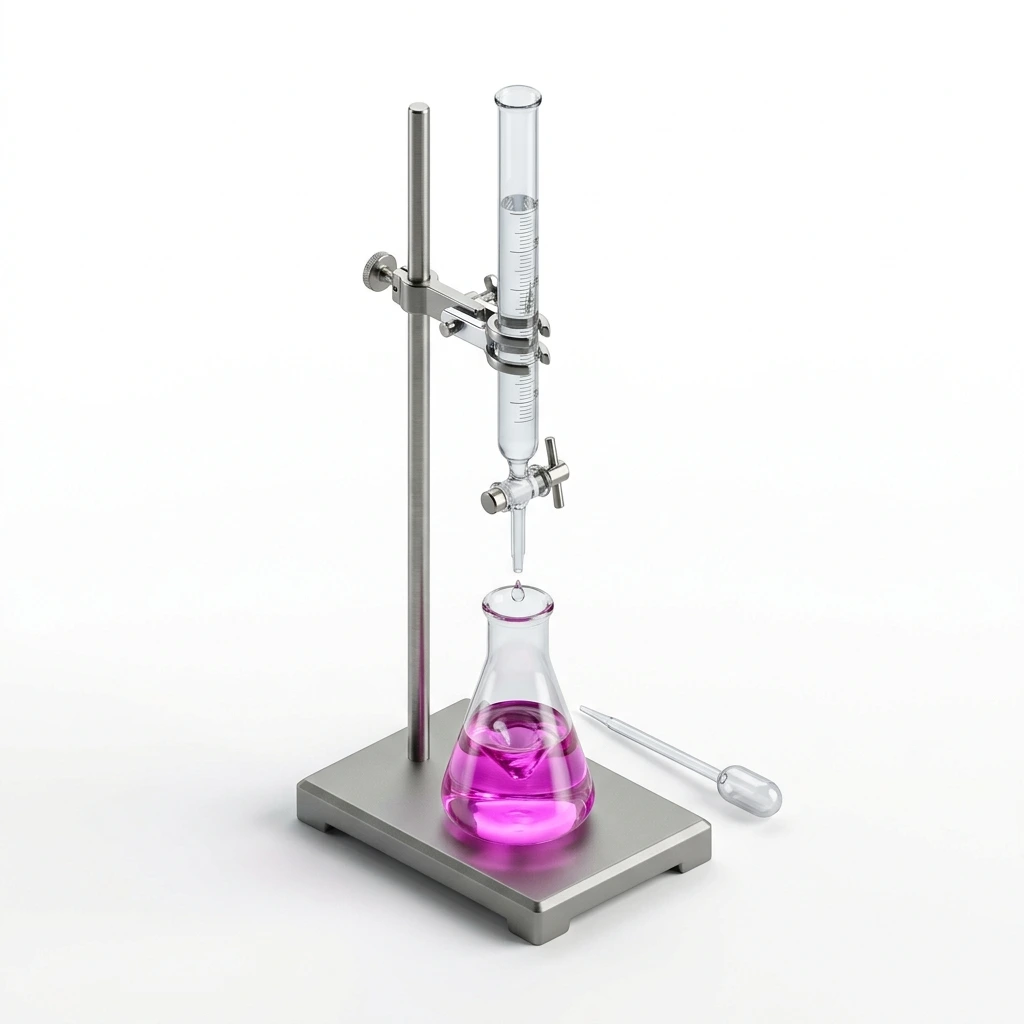
Identifying unknown organic compounds is a core skill in chemical analysis. This virtual laboratory simulates the systematic procedure for detecting functional groups in an unknown sample. Students perform a series of chemical 'wet tests,' observing color changes, precipitate formation, and gas evolution. The simulator features a high-fidelity animation engine that renders realistic silver mirrors, brick-red precipitates, and effervescence within a virtual test tube.
- To distinguish between aliphatic and aromatic aldehydes and ketones.
- To identify primary and secondary alcohols using the Iodoform test.
- To detect the presence of carboxylic acids and phenolic groups through acidity and complexation tests.
- To master the use of specialized reagents like Tollen’s, Fehling’s, and Brady’s Reagent (2,4-DNPH).
- Unknown Sample Reservoir: Contains various alcohols, aldehydes, ketones, and acids.
- Interactive Test Tube & Pipette: For precise reagent delivery and heating.
- Water Bath & Bunsen Burner: Automated heating modules for specific oxidative tests.
- Observation Log: An automated ledger that records observations and provides chemical inferences.
- Molecular Detection Panel: A submission tool to confirm the identity of the unknown sample.
- Sample Preparation: Click 'New Unknown' to receive a randomized sample. Note the physical properties (state and odor) in the sidebar.
- Preliminary Test: Apply the Blue Litmus Test. If the paper turns red, the compound is likely a carboxylic acid or a phenol.
- Aldehyde vs. Ketone Exploration: Perform the Tollen’s Test. Watch for the formation of a silver mirror on the inner walls of the tube. This confirms the presence of an aldehyde group: $$ - ext{CHO} $$.
- Specialized Testing: Use Fehling’s Test to further classify the aldehyde. A brick-red precipitate confirms an aliphatic aldehyde (like ethanal), while no reaction indicates an aromatic one (like benzaldehyde).
- Final Identification: Review the 'Observation Log' to synthesize all findings. Select your guess from the 'Identify Compound' dropdown and click 'Submit Analysis' to verify your results.
.jpeg)
Initializing secure sandbox environment & decrypting simulation...