
Free Preview
Exploring Hooke's Law with a Digital Spring Simulator
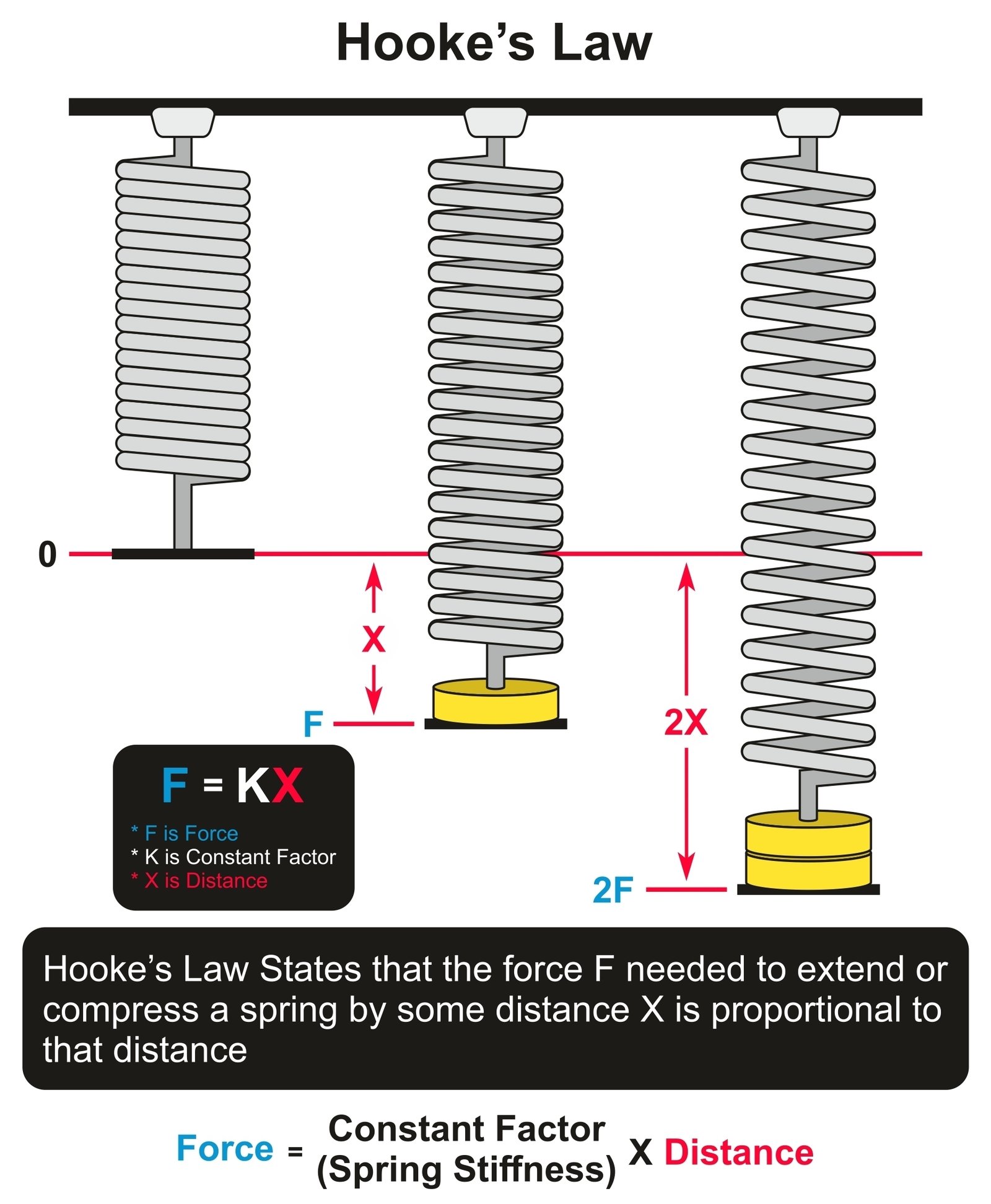
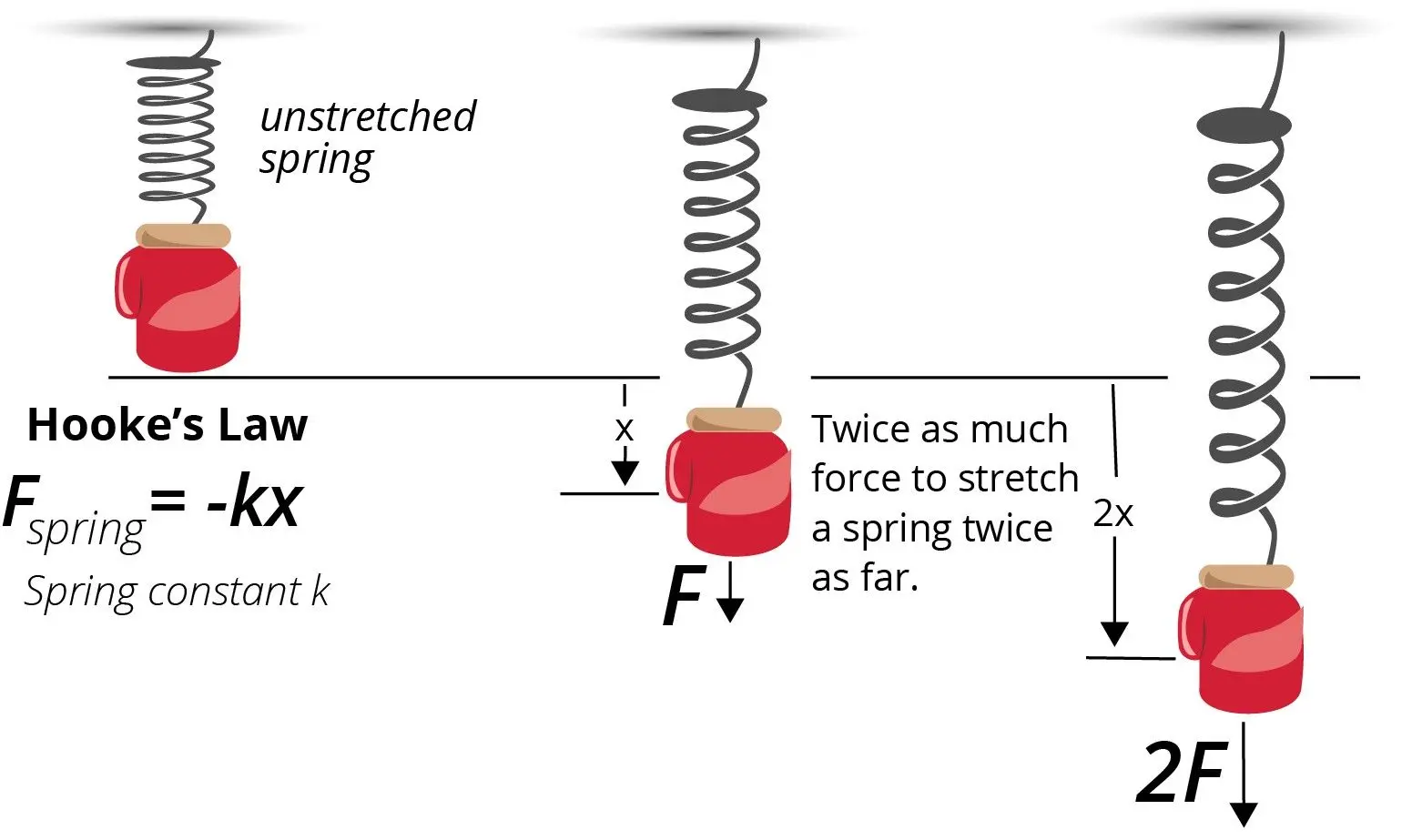
Hooke's Law describes the behavior of elastic materials, stating that the force needed to extend or compress a spring by a certain distance is proportional to that distance. This simula...

Hooke's Law describes the behavior of elastic materials, stating that the force needed to extend or compress a spring by a certain distance is proportional to that distance. This simulator provides a high-precision digital environment where students can hang virtual weights on a spring and measure the resulting displacement. It uniquely models both the linear elastic region and the non-linear plastic region, allowing students to observe the effects when a material is stretched beyond its limit.
To verify the direct proportionality between applied force and spring extension ($F \propto x$).To experimentally determine the Spring Constant ($k$) by analyzing the slope of a Force-Extension graph.To identify the Elastic Limit of a spring and observe the onset of permanent deformation.To apply the formula:
Variable Stiffness Spring: Adjustable spring constant ($k$) from $10$ to $60\text{ N/m}$.Slotted Mass Set: Virtual masses that can be added in $50\text{g}$ increments up to $1.0\text{ kg}$.Equilibrium-Settling Engine: Simulates realistic spring-mass-damper oscillations before reaching a steady state.Integrated Data Logger: An observation table to record multiple readings of mass, force, and extension.Linear Regression Graph: Real-time plotting tool that calculates the best-fit line (slope) for experimental data.
Initial Setup: Set the Spring Constant ($k$) to $25\text{ N/m}$. Observe the resting position of the pointer on the meter ruler.Adding Mass: Use the slider to add $0.10\text{ kg}$ to the hanger. Wait for the spring to stop bouncing.Record the Force ($F = mg \approx 0.98\text{ N}$) and the resulting extension from the live measurement panel.Data Collection: Repeat the process for masses $0.20\text{ kg}, 0.30\text{ kg}, 0.40\text{ kg}$, and $0.50\text{ kg}$. Click Record Reading for each.Analyzing Elastic Limit: Continue adding mass until the "Elastic Limit Exceeded" warning appears.Observe how the spring begins to glow red and stretches much further for small increments of weight. Note that the $F/x$ ratio is no longer constant.Slope Calculation: Click Analyze Slope in the graph section.The software will calculate the experimental $k$ value from the linear portion of your data points. Compare this to the value you set in the sidebar.
Initializing secure sandbox environment & decrypting simulation...