
Access Granted
Free Preview
Biological Sciences
•
Practical #67
Interactive Simulation Available
Exploring the Respiratory System
The respiratory system is a complex biological engine designed to facilitate the exchange of oxygen (O2) and carbon dioxide (CO2) between an organism and its environment. This virtual l...
AI Topic: Cell Biology & Microscopy
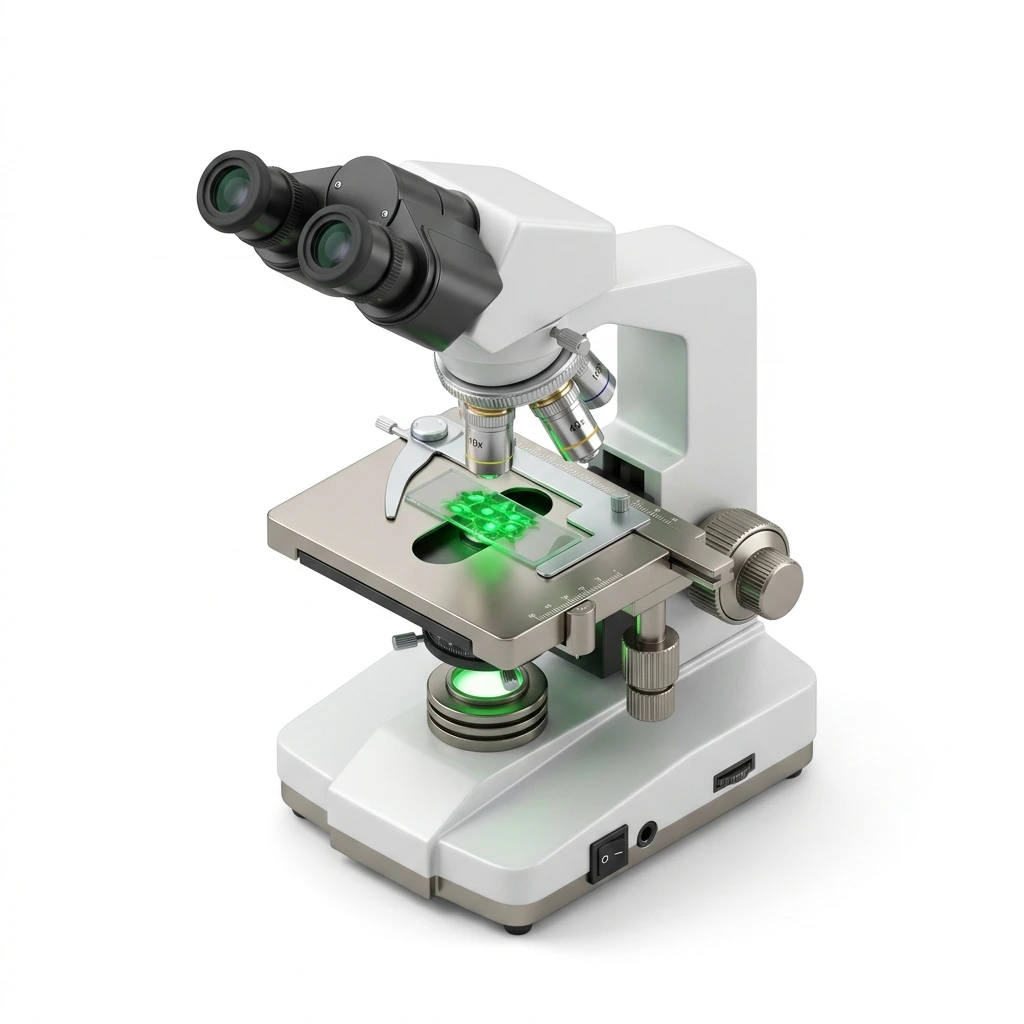
Life Sciences & Biology
Experiment Progress Pathway
0%
The respiratory system is a complex biological engine designed to facilitate the exchange of oxygen (O2) and carbon dioxide (CO2) between an organism and its environment. This virtual laboratory provides a multi-scalar view of the system, allowing students to transition from macro-level mechanical breathing to the microscopic diffusion of gases in the alveoli and systemic tissues.
- To identify the primary organs of the respiratory tract and their specific functions.
- To demonstrate the Mechanism of Breathing (Inspiration and Expiration) as a function of pressure and volume changes.
- To visualize the Partial Pressure Gradients that drive gas exchange in the lungs and tissues.
- To observe the role of the Diaphragm and Intercostal Muscles in thoracic expansion.
- To understand the transport of gases via red blood cells (Hemoglobin) and the plasma (Bicarbonate).
- Structural Anatomy Explorer: Interactive 2D model with hover-activated physiological data.
- Ventilation Simulator: Real-time animation of lung expansion/contraction with live pressure-volume gauges.
- Alveolar Exchange Visualizer: Microscopic view of the respiratory membrane showing diffusion of O2 and CO2.
- Systemic Transport Module: Animated capillary bed showing oxygen unloading and carbon dioxide loading at the cellular level.
- Anatomical Review: Use the Anatomy module to identify the upper and lower respiratory tracts. Note the bifurcation of the trachea into the primary bronchi.
- Mechanics of Ventilation: Navigate to the Mechanism module.
- Click Inhale. Observe the diaphragm flattening and the thoracic volume bar increasing.
- Observe the corresponding drop in Intrapulmonary Pressure, illustrating Boyle's Law:
$$P_1 V_1 = P_2 V_2$$ - External Respiration (Alveoli): Switch to the Gas Exchange module.
- Watch the O2 particles cross from the alveolar air space into the pulmonary capillary.
- Note the partial pressure difference (104 mmHg vs 40 mmHg) that powers this passive transport.
- Internal Respiration (Tissues): Proceed to the Transport module.
- Observe the color change of the Red Blood Cells (RBCs) as they unload oxygen to the tissue cells.
- Identify the different forms of CO2 transport, specifically the Bicarbonate (HCO3−) ions floating in the plasma.
.jpeg)
.jpeg)
Student Authentication Required
Please login to your account to generate the quiz, record marks, and earn completion credit.
Initializing secure sandbox environment & decrypting simulation...