
Access Granted
Free Preview
Biological Sciences
•
Practical #66
Interactive Simulation Available
Virtual Animal Lab: Dissection and Anatomy Exploration
The Virtual Animal Lab provides a comprehensive and ethical environment for studying vertebrate anatomy. Students can transition from the microscopic cellular level to complex organ sys...
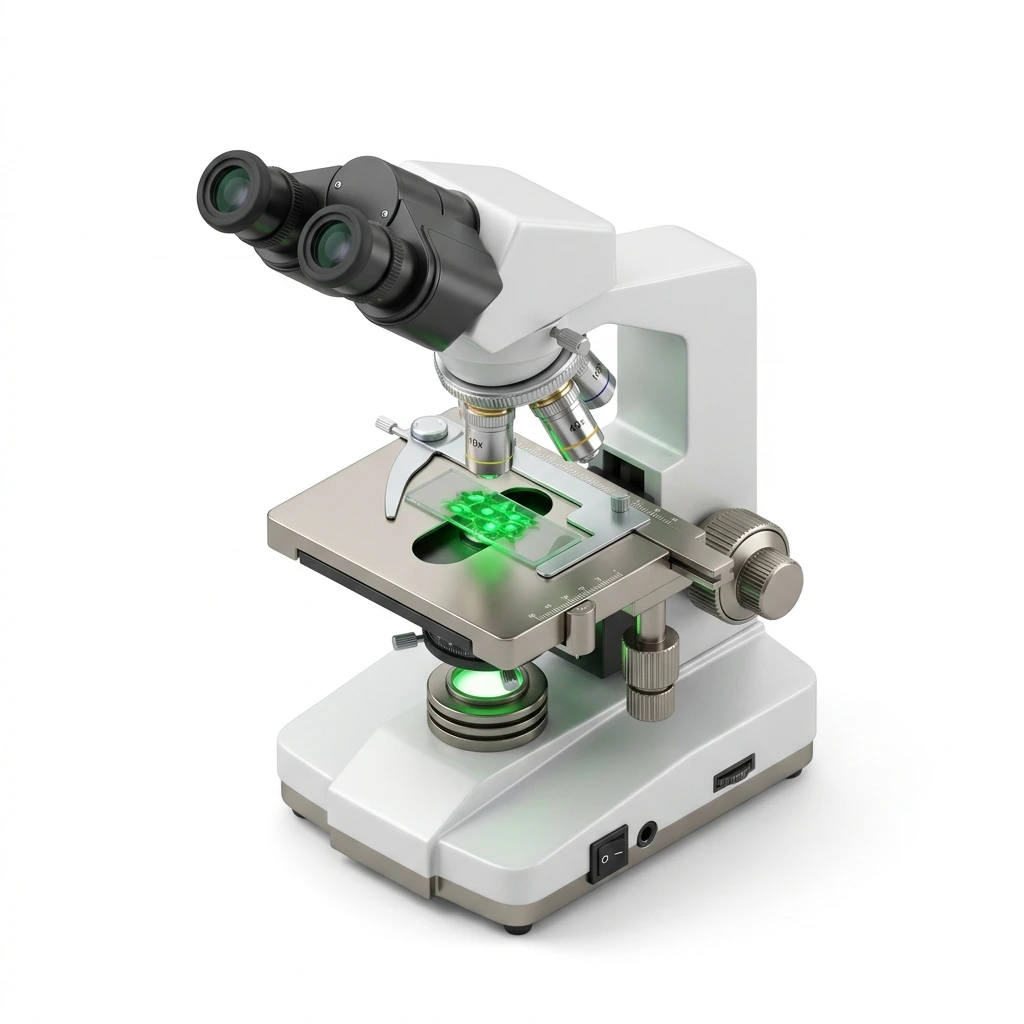
AI Topic: Cell Biology & Microscopy
Life Sciences & Biology
Experiment Progress Pathway
0%
The Virtual Animal Lab provides a comprehensive and ethical environment for studying vertebrate anatomy. Students can transition from the microscopic cellular level to complex organ systems. The simulator features a highly interactive Virtual Dissection Tray, allowing users to toggle through skin and muscular layers to reveal internal viscera. Each organ is interactive, providing real-time physiological data and functional descriptions.
- To understand the Biological Hierarchy (Cell → Tissue → Organ → System).
- To identify external Morphological Features (Tympanum, Nictitating membrane, Webbed feet).
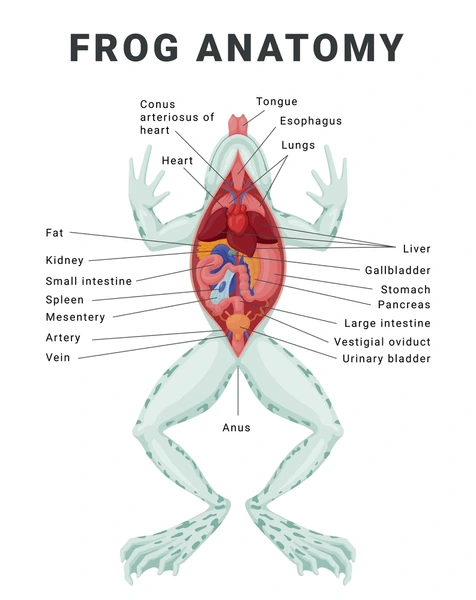
- To perform a Digital Dissection to locate and name major internal organs.
- To visualize the Interdependence of Systems (e.g., how the Circulatory system transports nutrients from the Digestive system).
- To observe the stages of Metamorphosis and the physiological changes occurring between aquatic and terrestrial life.
- Hierarchy Explorer: Interactive cards detailing structural organization.
- External Morphology Tool: Animated specimen with jump, breathe, and croak simulations.
- Virtual Dissection Tray: Multi-layered SVG specimen with zoom/pan capabilities.
- System Interaction Flowchart: Real-time animation of feeding and homeostasis.
- Lifecycle Morph-Slider: Continuous simulation of egg-to-adult transition.
- Morphological Study: Navigate to the External module. Use the 'Jump' and 'Breathe' buttons to observe muscle and skin movement.
- Incision & Dissection: Switch to the Anatomy module.
- Select Layer 2 (Muscular) to see the underlying tissue.
- Select Layer 3 (Internal Organs) to open the body cavity.
- Organ Identification: Hover over or tap specific organs (e.g., the Heart or Gallbladder) to reveal their function. Use the System Highlighters to isolate the Digestive or Respiratory tracts.
- Physiological Interaction: In the Systems module, click Trigger Action: EAT BUG. Watch the flowchart to see how nutrients move from the stomach to the bloodstream and finally to the cells.
- Developmental Analysis: In the Life Cycle module, use the Morph-Slider. Observe the Tadpole stage $$ 26 - 50 ext{%} $$and note the presence of gills and a tail. Advance to the Adult stage and observe the shift to lung respiration and the absorption of the tail.
.jpeg)
Student Authentication Required
Please login to your account to generate the quiz, record marks, and earn completion credit.
Initializing secure sandbox environment & decrypting simulation...