Chemical Engineering•Practical #6
Interactive Simulation Available
Determination and Calculation of pH of Various Solutions
The pH scale is a fundamental concept in chemistry used to quantify the hydrogen ion concentration ($[H^+]$) within an aqueous solution. It provides a standardized logarithmic measure t...
Chemical engineering pH Determination Laboratory ID: 6
AI Topic: Volumetric & Analytical Chemistry
Chemical Sciences & Engineering
Public Preview ModeSign in to track progress pathway, generate AI quizzes, record completion, and access protected simulators.Student Login
ADVERTISEMENT
Experiment Progress Pathway
0%
The pH scale is a fundamental concept in chemistry used to quantify the hydrogen ion concentration ($[H^+]$) within an aqueous solution. It provides a standardized logarithmic measure to rapidly determine whether a solution is acidic, basic (alkaline), or neutral. The scale typically ranges from 0 to 14:pH < 7: Acidic solutionpH = 7: Neutral solutionpH > 7: Basic (alkaline) solutionMathematically, pH is defined as the negative base-10 logarithm of the hydrogen ion concentration:
$$pH = -\log_{10}[H^+]$$
Similarly, for basic solutions, the hydroxide ion concentration ($[OH^-]$) is measured as pOH. In any aqueous solution at standard temperature ($25^\circ\text{C}$), the relationship between pH and pOH remains constant:
$$pH + pOH = 14$$
To determine the pH of given acidic, basic, and neutral solutions.
To calculate pH from hydrogen ion concentration.
To compare experimental pH readings with theoretical values.
To understand the significance of pH in chemical and biological systems.
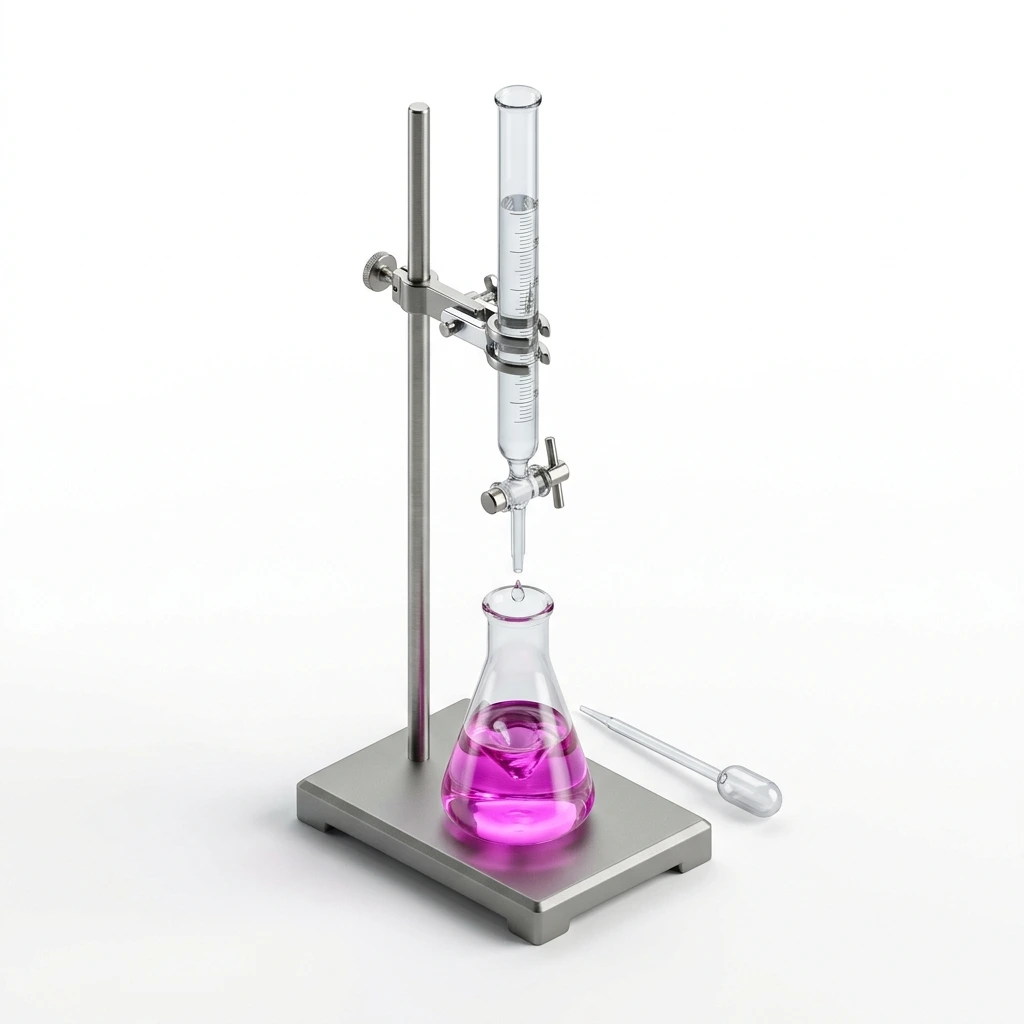
Apparatus: Beakers, pipettes, test tubes, glass rods, pH meter (or pH paper), measuring cylinders.
Chemicals:
Hydrochloric acid (HCl) of known concentration
Sodium hydroxide (NaOH) of known concentration
Distilled water
Buffer solutions (optional)
Indicators: Litmus paper (red and blue) or universal indicator solutio
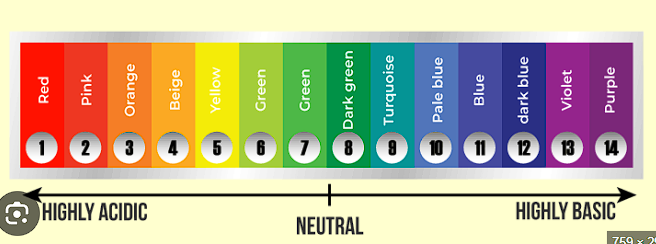
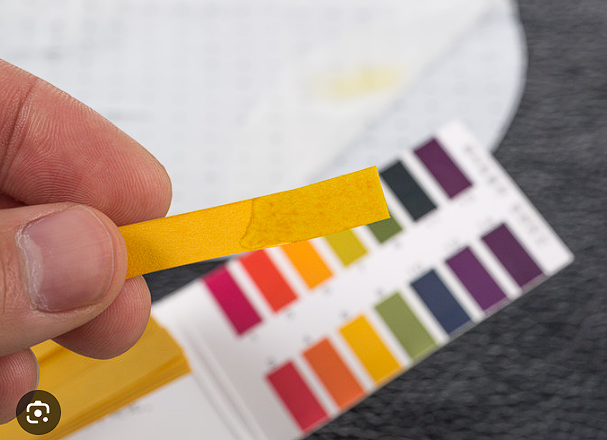
Preparation of Solutions: Prepare $0.1\text{ N}$ HCl (hydrochloric acid) and $0.1\text{ N}$ NaOH (sodium hydroxide) solutions. Transfer $50\text{ mL}$ of each solution into separate, clean glass beakers.Measurement Using a pH Meter: First, calibrate the virtual pH meter using standard buffer solutions (pH 4.0, 7.0, and 10.0). Once calibrated, immerse the pH electrode into the test solution, wait for the reading to stabilize, and record the digital pH value.Measurement Using Indicators: Dip a strip of universal indicator paper (or litmus paper) into the test solution. Observe the resulting color change and match it against the standard universal color reference chart to estimate the approximate pH.Theoretical Calculation of pH: Verify your experimental findings by calculating the theoretical pH for each solution.For Acids (e.g., HCl): Use the known hydrogen ion concentration directly in the formula:
$$pH = -\log_{10}[H^+]$$
For Bases (e.g., NaOH): First, determine the hydroxide ion concentration ($[OH^-] = \text{Concentration of NaOH}$) to calculate the pOH. Then, find the pH using the constant relationship:
$$pOH = -\log_{10}[OH^-]$$$$pH = 14 - pOH$$
Observation and Recording: Prepare a data table to log the observed pH (from both the digital meter and the indicator paper) alongside the calculated theoretical pH. Compare the results to check for accuracy and experimental error.
View Fullscreen
View Fullscreen
AI Knowledge Evaluation
10 AI-generated multiple-choice questions tailored to this practical. Score 7/10 (70%) or higher to verify experiment completion.
Student Authentication Required
Please login to your account to generate the quiz, record marks, and earn completion credit.
Chat messages are monitored by the Virtual Lab team to ensure a safe environment.
By continuing, you agree to our community guidelines and acceptable use policy.
Virtual Lab Community Chat
Ad Blocker Detected
Virtual Lab Simulator is a non-profit educational platform. To keep our virtual labs and server operations free and running continuously, we place lightweight ads on the site. Please disable your ad blocker for this site and continue.