
Free Preview
Titrimetric Analysis – Determination of the Concentration of a Given Solution Using Standard Solution
Titrimetric analysis (volumetric analysis) is a quantitative chemical analysis method used to determine the concentration of an unknown solution by reacting it with a standard solution ...
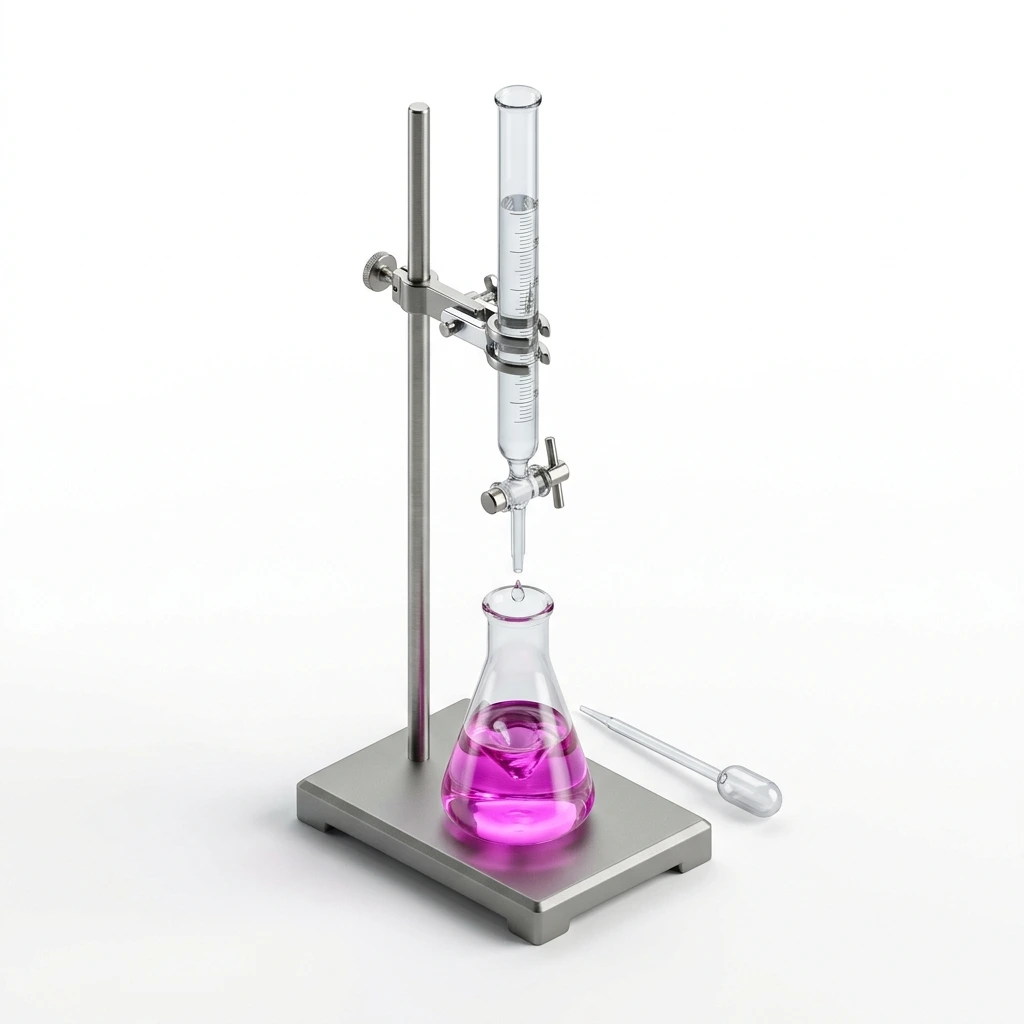
Titrimetric analysis (volumetric analysis) is a quantitative chemical analysis method used to determine the concentration of an unknown solution by reacting it with a standard solution of known concentration. The reaction continues until the equivalence point is reached, which is usually detected by a suitable indicator. Types of titrations include:
Acid–base titrations (e.g., HCl vs. NaOH)
Redox titrations (e.g., KMnO₄ vs. oxalic acid)
Complexometric titrations (e.g., EDTA vs. metal ions)
Precipitation titrations (e.g., AgNO₃ vs. NaCl)
The most common example is the neutralization reaction:
To understand the principles of titrimetric (volumetric) analysis.
To determine the molarity/normality of a given solution using a standard solution.
To develop practical skills in handling volumetric glassware and indicators.
To calculate accurate concentrations from experimental data.
Apparatus: Burette, pipette, conical flask, funnel, beakers, wash bottle.
Chemicals: Standard NaOH solution (0.1 N), Hydrochloric acid (unknown concentration), Phenolphthalein indicator.
Other: Distilled water, filter paper, glass rod
Preparation of apparatus
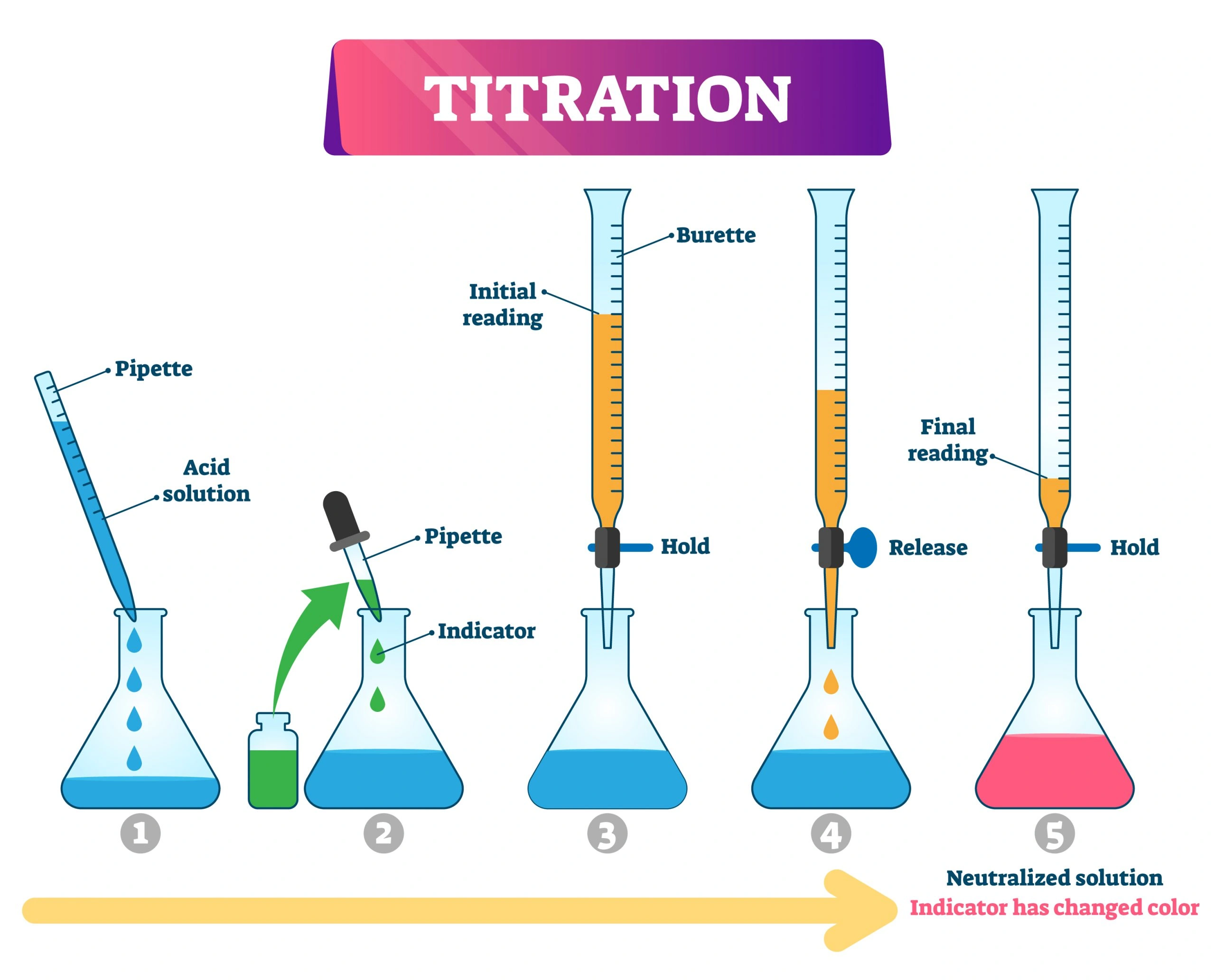
Rinse the burette with the acid solution (HCl) and fill it with the same.
Rinse the pipette with the standard NaOH solution and use it to transfer 25 mL into a clean conical flask.
Adding indicator
Add 2–3 drops of phenolphthalein indicator to the conical flask containing NaOH.
The solution will appear pink.
Titration process
Place the conical flask on a white tile (for clear visibility).
Slowly add HCl from the burette into the flask while continuously swirling.
Near the endpoint, add acid drop by drop until the pink color just disappears and the solution becomes colorless.
Repeat for accuracy
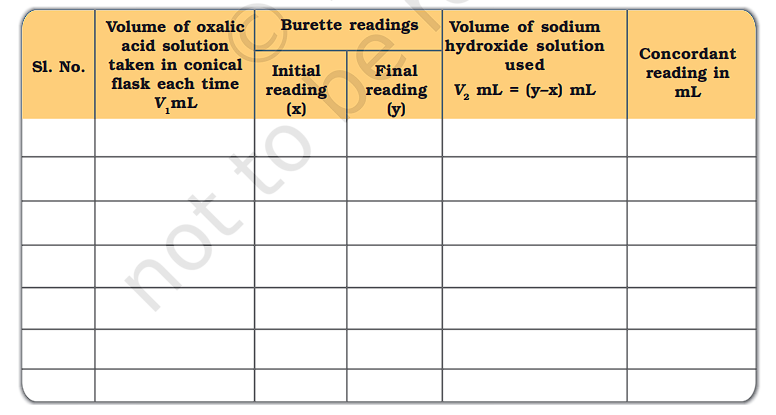
Note the burette reading.
Repeat the titration 3 times until you get concordant values (within ±0.1 mL).
Calculation
1
1
2
2 N 1
V 1
2
V 2
1 N 1
1 V 1
2 N 2
2 V 2
Initializing secure sandbox environment & decrypting simulation...