
Free Preview
Electromagnetic Induction Simulation
Electromagnetic induction is the fundamental principle behind modern electricity generation. Discovered by Michael Faraday, this law states that a changing magnetic field within a close...
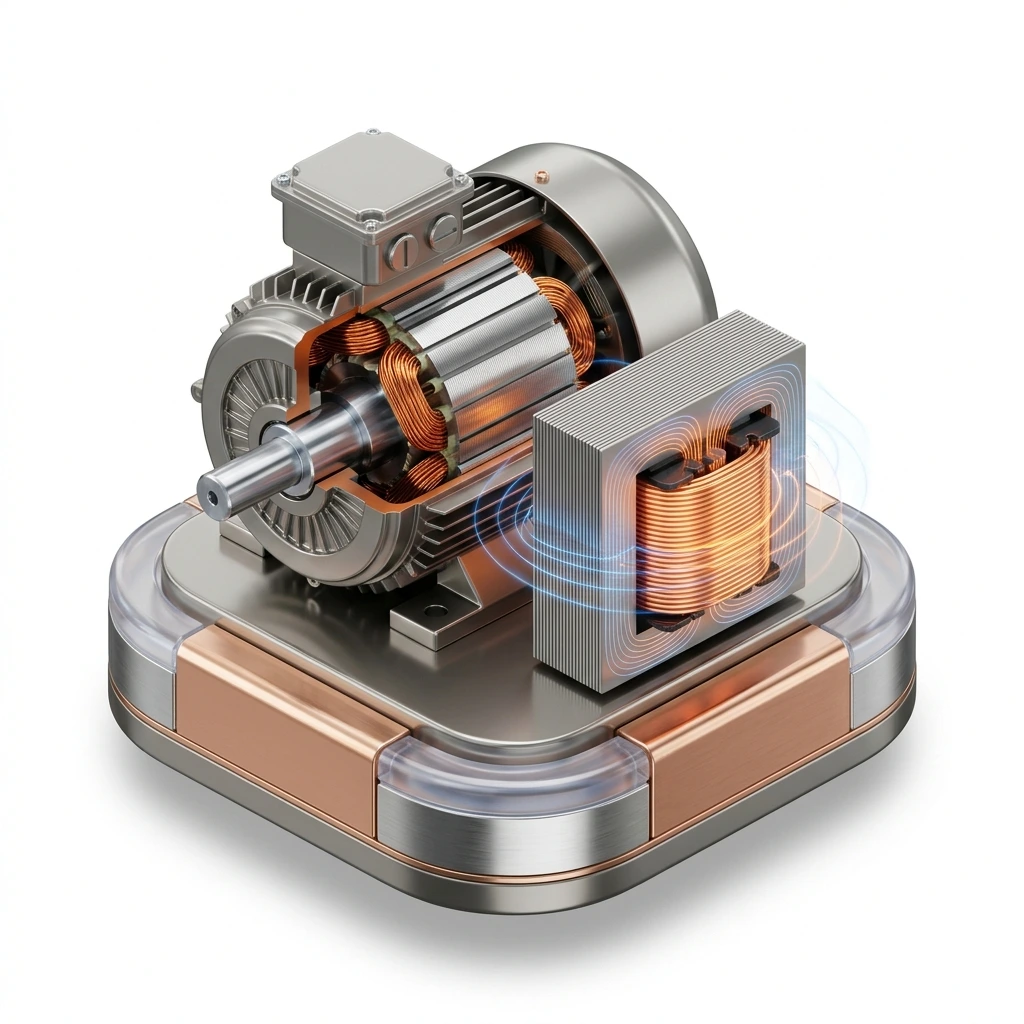
Electromagnetic induction is the fundamental principle behind modern electricity generation. Discovered by Michael Faraday, this law states that a changing magnetic field within a closed loop of wire induces an electromotive force (EMF) or voltage. This interactive simulator allows students to manually push a bar magnet through a copper coil or use an automated AC generator mode to observe how the rate of magnetic flux change translates directly into electrical energy.
- To observe the relationship between the speed of a moving magnetic field and the magnitude of induced voltage.
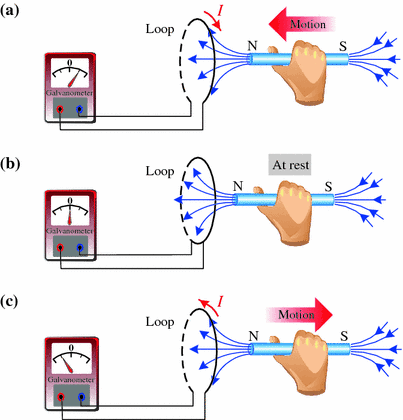
- To demonstrate Lenz's Law by observing how the direction of the induced current opposes the change in magnetic flux.
- To understand how altering the number of wire turns (N) and magnet strength affects the output.
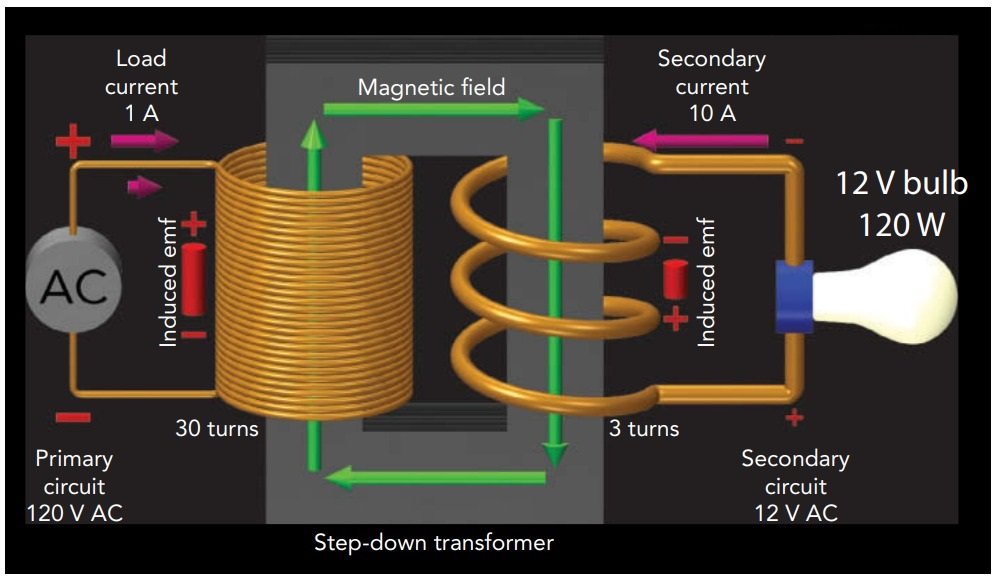
- To explore the principles of step-up and step-down transformers.
- To verify Faraday's Law mathematically: $$EMF = -N rac{d ext{Φ}}{dt}$$
- Virtual Bar Magnet: With adjustable field strength and drag sensitivity.
- Primary Solenoid Coil: With an adjustable number of turns (N1).
- Secondary Coil (Transformer Mode): For wireless induction with adjustable turns (N2).
- Output Instruments: Toggleable between a Galvanometer, an LED bulb, and a precise Voltmeter.
- Live Telemetry Plotter: Real-time graphing of induced primary and secondary voltages.
- Manual Induction: Leave the instrument set to Galvanometer. Click and drag the bar magnet back and forth through the primary coil. Observe the needle deflect—note that moving the magnet faster generates a higher voltage peak.
- Lenz's Law Verification: Notice the polarity. Pushing the North pole into the coil deflects the needle one way, while pulling it out deflects it the opposite way, generating an alternating current.
- Variable Testing: Increase the Coil Turns (N) slider to 500. Pass the magnet through at the same speed and observe the proportionally larger voltage spike on the Live Graph.
- AC Generator Mode: Check the AC Generator Mode (Sine) box. Observe how a continuous, steady oscillation creates a perfect sinusoidal voltage wave. Switch the instrument to LED Mode to see the bulb pulse and change colors based on polarity.
- Transformer Action: Enable Transformer Mode. Set Primary Turns to 180 and Secondary Turns to 500. Observe the graph and digital readouts to see the voltage
.jpeg)
Initializing secure sandbox environment & decrypting simulation...