Access Granted
Free Preview
Physical Sciences • Practical #36 Interactive Simulation Available

Determination of the Velocity of Sound in Air using a Resonance Tube

This interactive physics simulation replicates the classic resonance tube experiment. It allows students to determine the speed of sound in air by finding the resonant lengths of a clos...
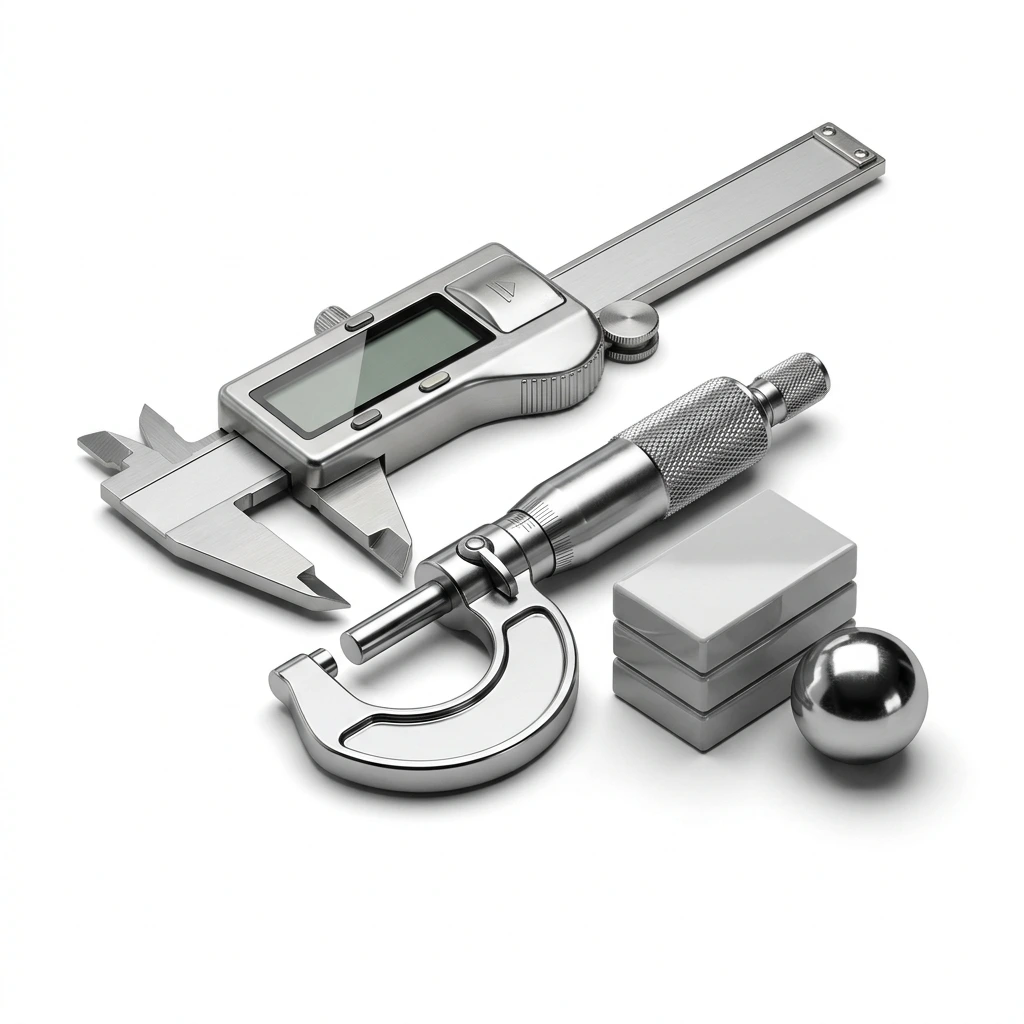
Physics Velocity of Sound via Resonance Tube ID: 36
AI Topic: Mechanics & Precision Measurements
Determination of the Velocity of Sound in Air using a Resonance Tube 3D Topic Apparatus
Physical Sciences & Metrology
Public Preview Mode Sign in to track progress pathway, generate AI quizzes, record completion, and access protected simulators.
ADVERTISEMENT
Experiment Progress Pathway
0%

This interactive physics simulation replicates the classic resonance tube experiment. It allows students to determine the speed of sound in air by finding the resonant lengths of a closed air column. The lab features a dynamic water level control, animated standing waves, a live acoustic intensity meter, and adjustable environmental parameters.

To determine the velocity of sound in air at room temperature using a resonance tube and a tuning fork.

To understand the formation of longitudinal standing waves in a closed pipe.

To investigate the effects of temperature, humidity, and tube diameter (end correction) on the speed of sound and resonant frequencies.

Virtual Resonance Tube: With adjustable water level via a reservoir.Virtual Tuning Forks: Selectable frequencies ($341\text{ Hz}$, $480\text{ Hz}$, $512\text{ Hz}$).Rubber Pad (Mallet): To strike the tuning fork and initiate vibrations.Telemetry HUD: Live acoustic intensity meter and data recording table.
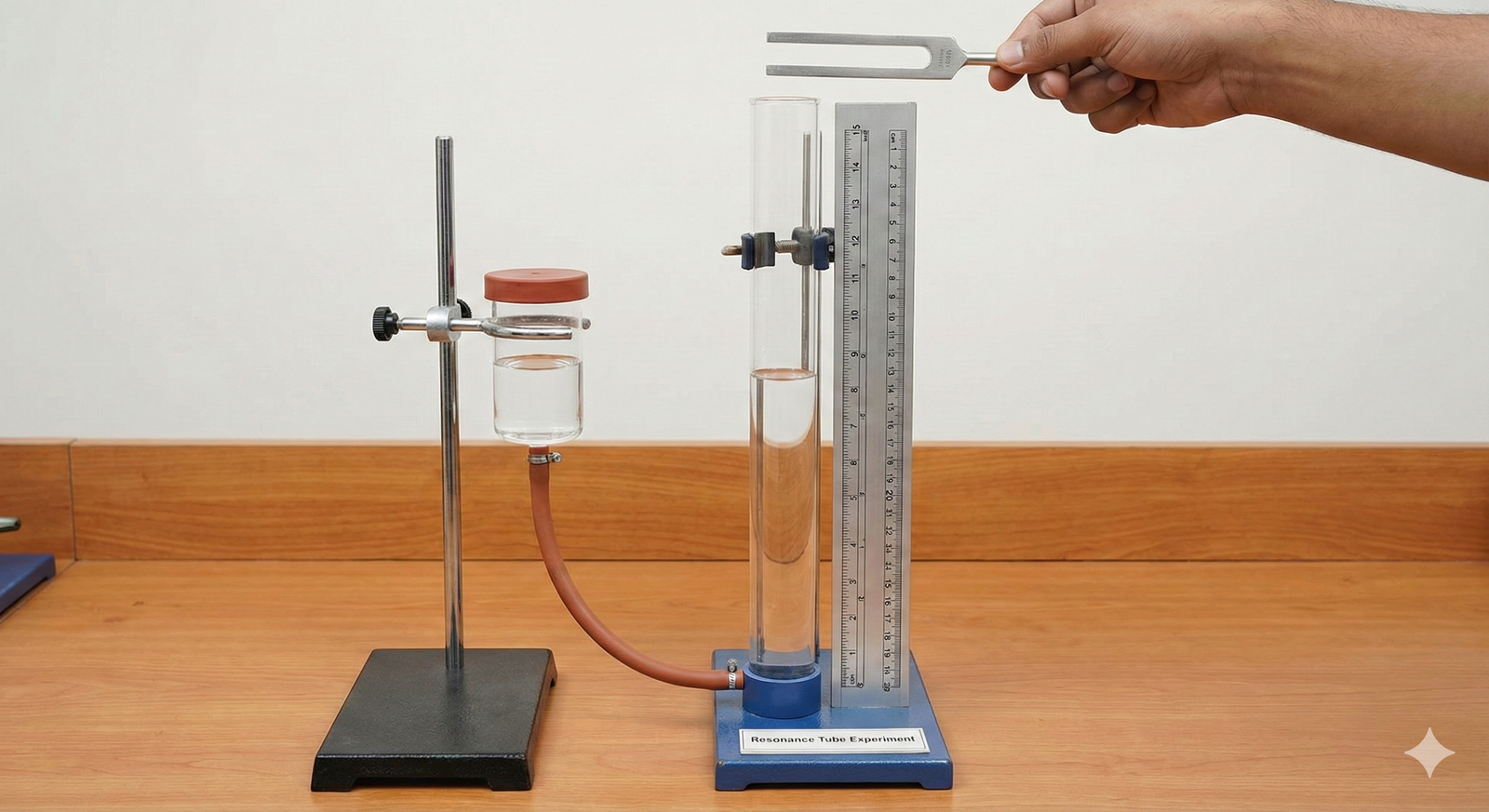
Setup: Select a tuning fork frequency (e.g., $512\text{ Hz}$) and set the environmental conditions (Temperature, Humidity, Tube Diameter).Initiate Vibration: Click "Strike with Rubber Pad" to cause the tuning fork to vibrate over the open end of the tube.Find First Resonance ($L_1$): Slowly adjust the water level downwards. Watch the Acoustic Intensity meter and listen to the audio. When the intensity hits a maximum peak, click Record $L_1$.Find Second Resonance ($L_2$): Continue lowering the water level until you hear the next loud resonance peak. Click Record $L_2$.Calculate: Click "Calculate & Save" to compute the experimental velocity of sound using the formula:
$$v = 2f(L_2 - L_1)$$
Analysis: Compare your calculated velocity against the true theoretical speed. Repeat the process with different frequencies or temperatures to observe the variations.

AI Knowledge Evaluation

10 AI-generated multiple-choice questions tailored to this practical. Score 7/10 (70%) or higher to verify experiment completion.

Student Authentication Required
Please login to your account to generate the quiz, record marks, and earn completion credit.
Interactive Simulation Sandbox

Initializing secure sandbox environment & decrypting simulation...

ADVERTISEMENT
× ❮ ❯

Practical Report Issue

Reporting for: Determination of the Velocity of Sound in Air using a Resonance Tube

Developer Inspection Restricted

Developer Tools and source inspection are restricted on this platform to protect intellectual property and proprietary virtual laboratory simulations.

Welcome to Community Chat!

📢 Community Chat is Now Live

Connect with fellow learners in real-time! You can ask questions, share experiences, collaborate on experiments, and learn together.

Real-time messaging
Group discussions
File sharing
Online/offline presence

⚠️ Important Guidelines

  • Be respectful and professional
  • No spam, harassment, or inappropriate content
  • Keep discussions educational and relevant
  • Violations may result in warnings or bans

Read Full Community Guidelines →

Chat messages are monitored by the Virtual Lab team to ensure a safe environment. By continuing, you agree to our community guidelines and acceptable use policy.