
Free Preview
Determination of the Focal Length of a Convex Mirror and a Concave Lens using the No-Parallax Method
This advanced simulation provides a virtual optical bench for performing complex light experiments. It focuses on two primary procedures: determining the focal length of a convex mirror...
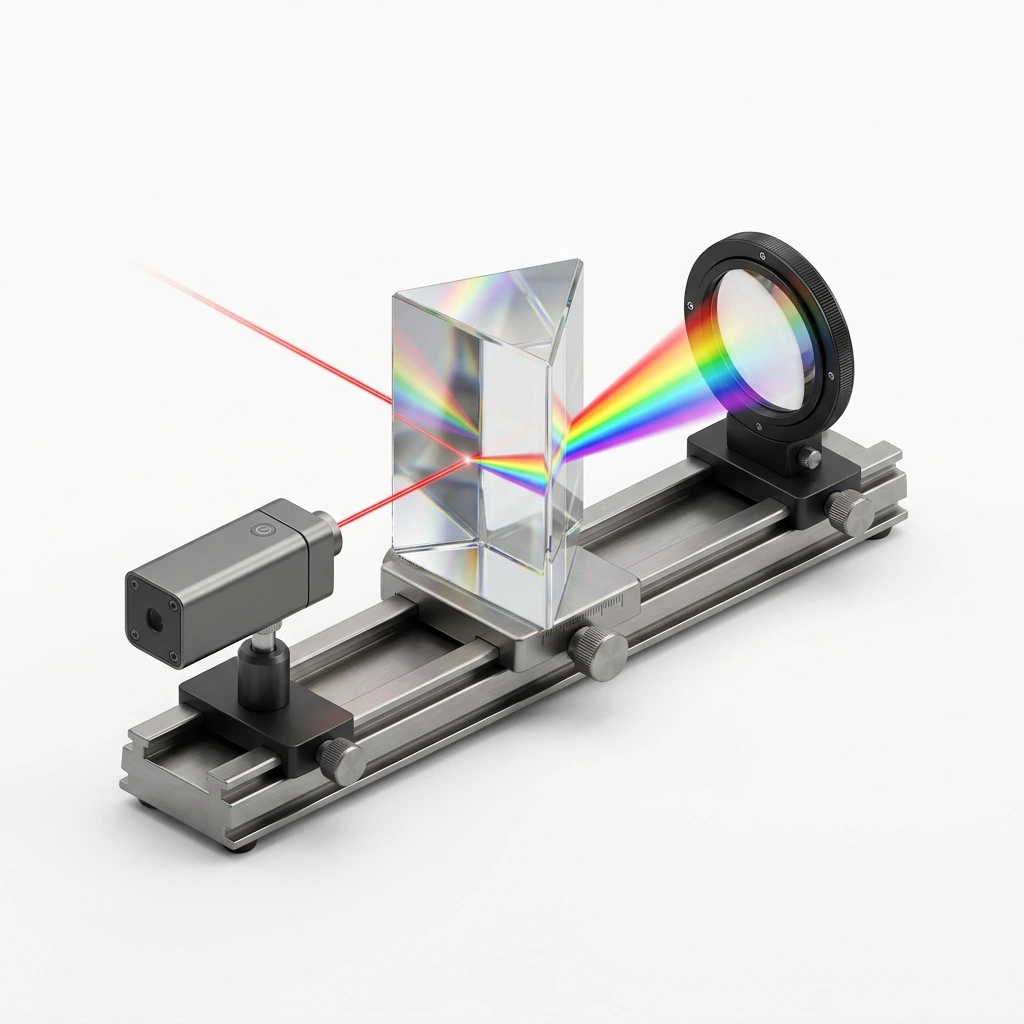
This advanced simulation provides a virtual optical bench for performing complex light experiments. It focuses on two primary procedures: determining the focal length of a convex mirror and a concave lens using the No-Parallax Method. The lab features a real-time ray-tracing engine and a dynamic parallax viewfinder to simulate the precision required in a physical darkroom lab.
The objectives of this laboratory experiment are as follows:
- To find the focal length (f) of a convex mirror by creating a virtual object using a convex lens.
- To determine the focal length of a concave lens by interposing it in the path of a converging beam.
- To master the concept of parallax—the relative shift between an object and its image.
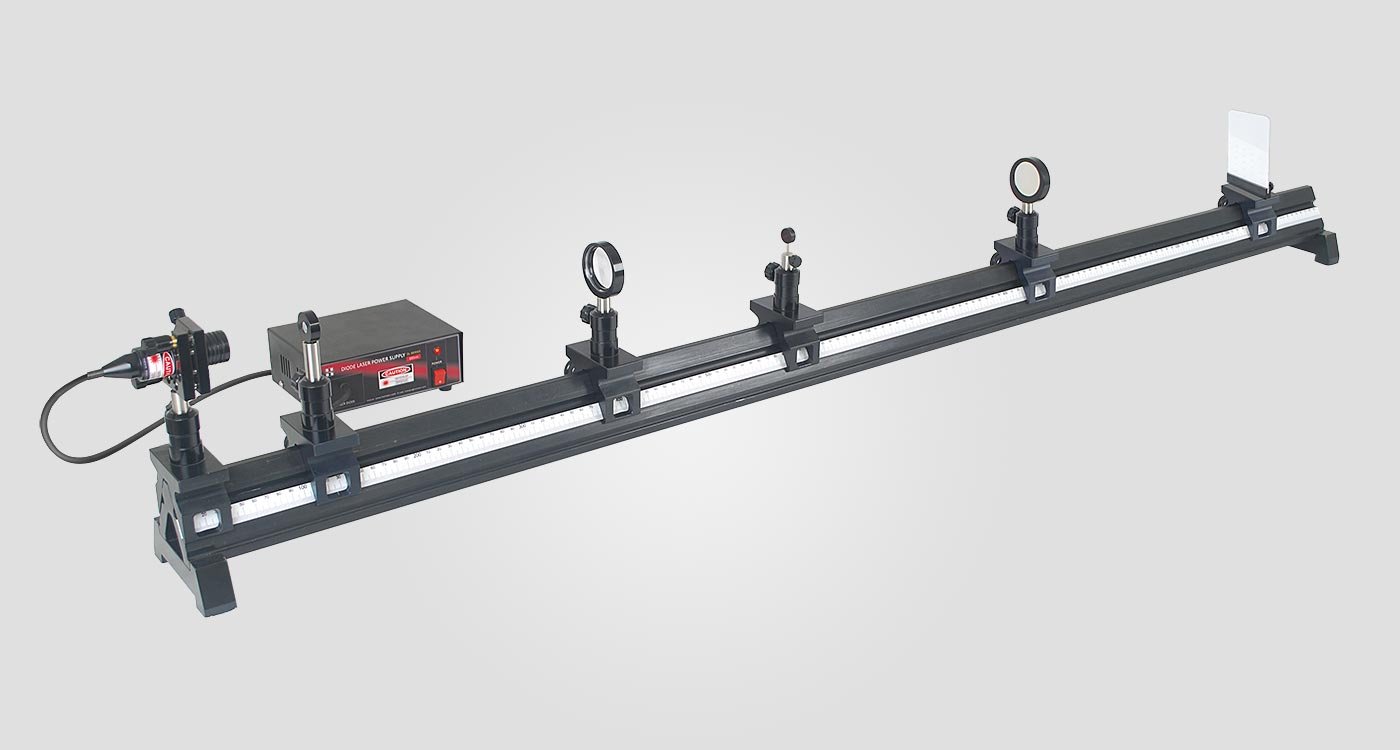
- Optical Bench: A 150 cm graduated rail with uprights.
- Object Needle (O): A gold-tipped needle acting as the source object.
- Convex Lens (L1): A converging lens used to create real images or converging beams.
- Convex Mirror / Concave Lens: The experimental component whose focal length is to be determined.
- Image Needle (I): Used in the concave lens experiment to locate the final real image.
(Convex Mirror Mode)
- Setup: Place the object needle (O) and convex lens (L1) to form a clear real image.
- Interposition: Place the convex mirror (M) between the lens and the image.
- Alignment: Move the mirror until the image formed by reflection coincides with the object needle.
- No-Parallax: Observe the parallax view; adjust the mirror until the object and image move together perfectly.
- Calculation: The distance between the mirror and the virtual object position equals the Radius of Curvature (R).$$f = \frac{R}{2}$$
(Concave Lens Mode)
- Initial Image: Use the convex lens to form a real image (I1).
- L2 Placement: Place the concave lens (L2) before I1; I1 now acts as a virtual object (u2).
- Final Reading: Move the image needle (I) to find the new position of the real image (v2) where parallax is removed.
- Calculation: Apply the lens formula to find the unknown focal length:$$f = \frac{u2 \times v2}{v2 - u2}$$
Initializing secure sandbox environment & decrypting simulation...