
Access Granted
Free Preview
Mechanical Engineering
•
Practical #13
Interactive Simulation Available
Reynolds Experiment: Laminar, Transitional, and Turbulent Flow in Pipes
The Reynolds number is a dimensionless quantity used to predict the flow regime in a pipe. It is defined as: $$ Re = rac{ ho V D}{ u} = rac{VD}{ u} $$ Where: Re = Reynolds number V = m...
AI Topic: Fluid Mechanics & Hydraulics
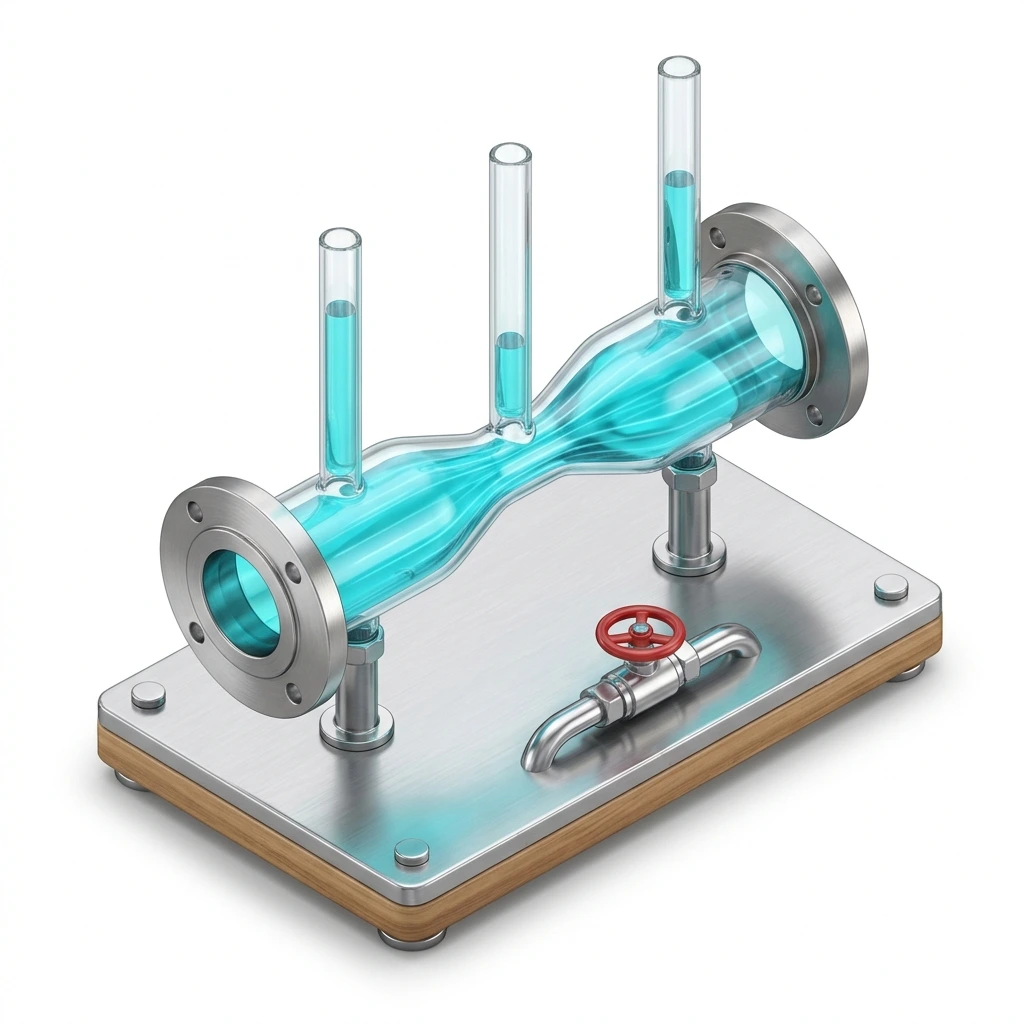
Mechanical & Civil Engineering
Experiment Progress Pathway
0%
The Reynolds number is a dimensionless quantity used to predict the flow regime in a pipe. It is defined as:
$$ Re = rac{
ho V D}{
u} = rac{VD}{
u} $$
Where:
- Re = Reynolds number
- V = mean velocity of fluid
- D = pipe diameter
- ρ = fluid density
- μ = dynamic viscosity
- ν = kinematic viscosity, defined as $$ u = rac{eta}{ ho} $$
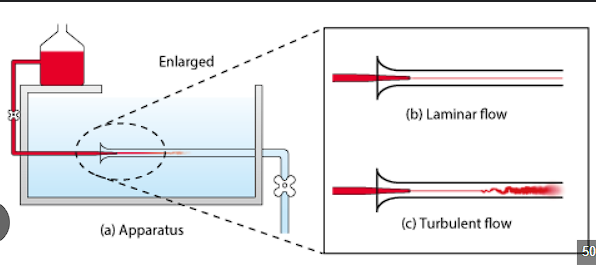
Flow regimes can be categorized as follows:
- Laminar flow: Re < 2000
- Transitional flow: 2000 ≤ Re < 4000
- Turbulent flow: Re ≥ 4000
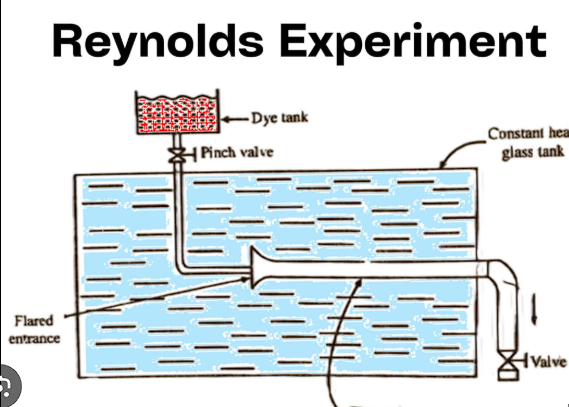
Dye or tracer visualization techniques help identify flow patterns within the pipe.
The objectives of this experiment are to:
- Study the flow of water in a circular pipe and distinguish between laminar, transitional, and turbulent flow.
- Determine the critical Reynolds number for the onset of turbulence.
- Understand the relationship between velocity, pipe diameter, and flow regime.
- Flow channel or pipe with a transparent section
- Water supply and flow control valve
- Manometer or differential pressure measurement device
- Flow meter (rotameter or volumetric)
- Dye injector or tracer (for visualizing flow patterns)
- Stopwatch
- Measuring scale/ruler
- Set up the flow apparatus with a transparent section for observation.
- Start the water flow at a low velocity and inject dye to visualize laminar flow.
- Gradually increase the velocity and observe the flow pattern until turbulence appears.
- Measure the flow rate and pipe diameter at each stage.
- Calculate the Reynolds number using the measured velocity and pipe diameter.
- Record the flow regime corresponding to the calculated Reynolds number.
Student Authentication Required
Please login to your account to generate the quiz, record marks, and earn completion credit.
Initializing secure sandbox environment & decrypting simulation...